
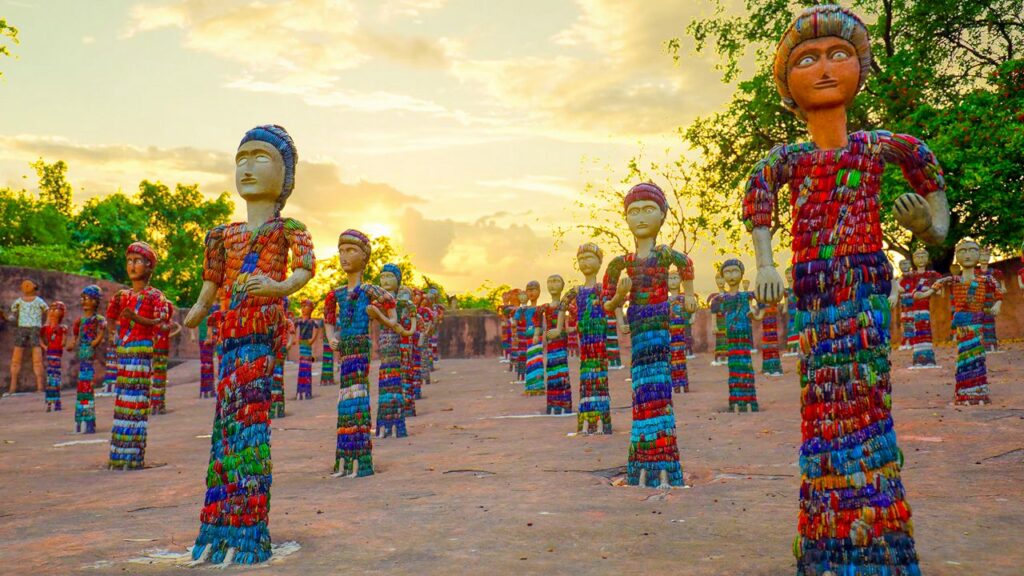
What do you get when you add broken bangles, cracked ceramics and pottery, disposed electrical sockets, wires, discarded household items, building debris, some cement and a vast jungle of imagination?
40 acres of The Rock Garden in Chandigarh, India to be precise.
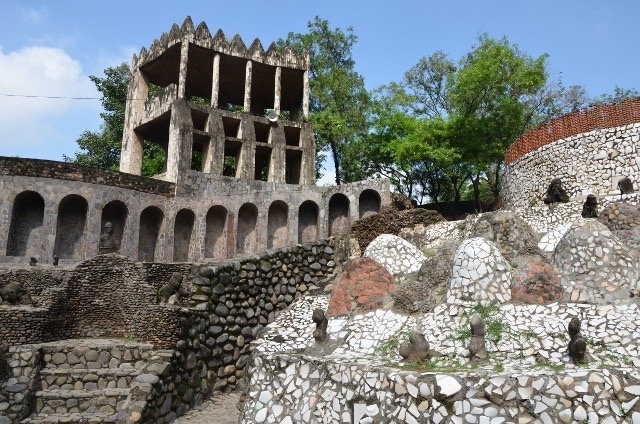
The garden is built entirely from abandoned industrial and household material. A fantastical landscape inspired by architecture spanning millennia, sitting atop lost memories of childhood, and arising out of the need to make wondrous art that simply exists.
Nek Chand
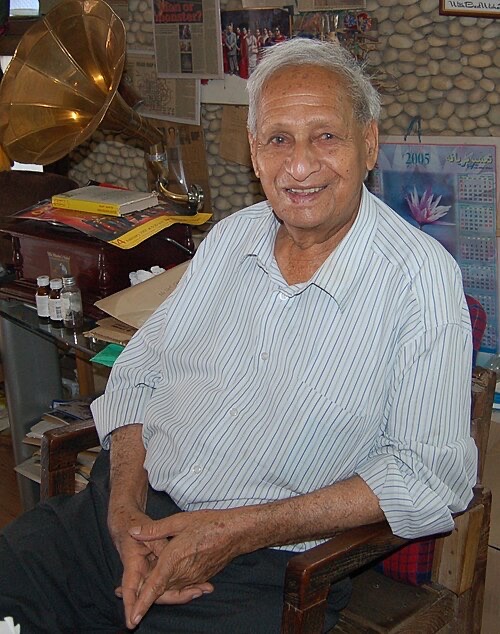
The secretive sculptor behind this visual artistic oasis is Nek Chand Saini (1924–2015), a self-taught artist whose life story is as compelling as his art.
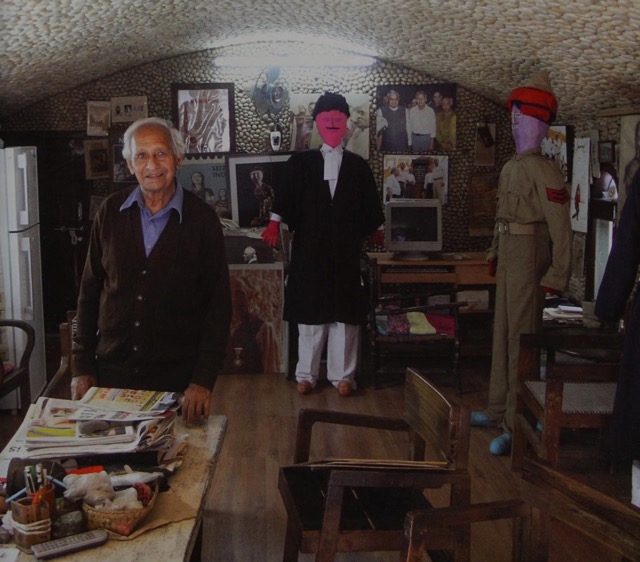
Nek Chand’s Chandigarh & Le Corbusier’s version
Born in 1924 in Berian Kalan in undivided India (present day Pakistan), Nek Chand’s journey is a testament to resilience, creativity, and the power of imagination. People, especially children, who face the Trauma of Displacement are left with a lasting wounds that needs nurturing.
Deeply influenced by folklore, nature, and communal life of his pre-partition home, Nek Chand recreated a fantastical world from the rubble of an old city that was being demolished to make way for a spanking new geometrical one.
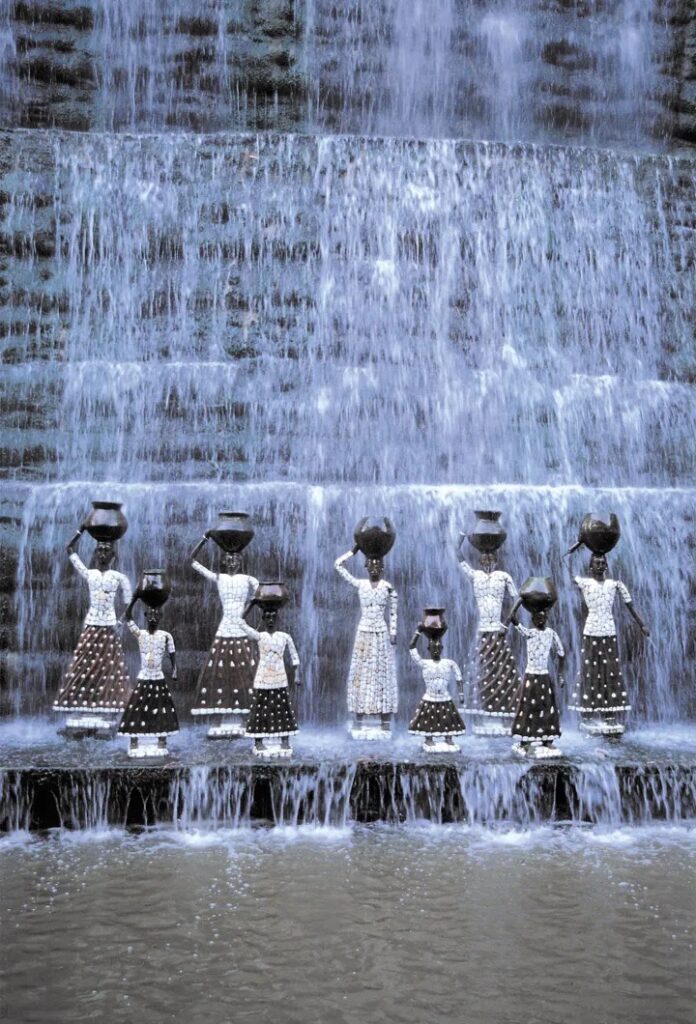
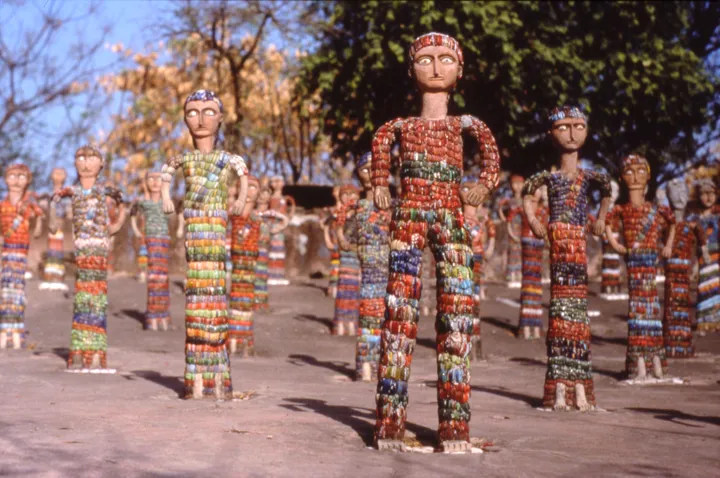
As a young man, in the 1950s, Nek Chand moved to Chandigarh for a job he found as part of the Indian government scheme for refugees. He was appointed as a road inspector for the Public Works Department. His job got him on the Swiss-French architect Le Corbusier’s Capitol Project – a massive initiative to construct a modern day capital for the state of Punjab.
Nek Chand and his team were charged with collecting torn down debris of 24 villages demolished to make way for a New Chandigarh.
This is where his artistic journey began, secretly, down a deep, magical and “forbidden” path.
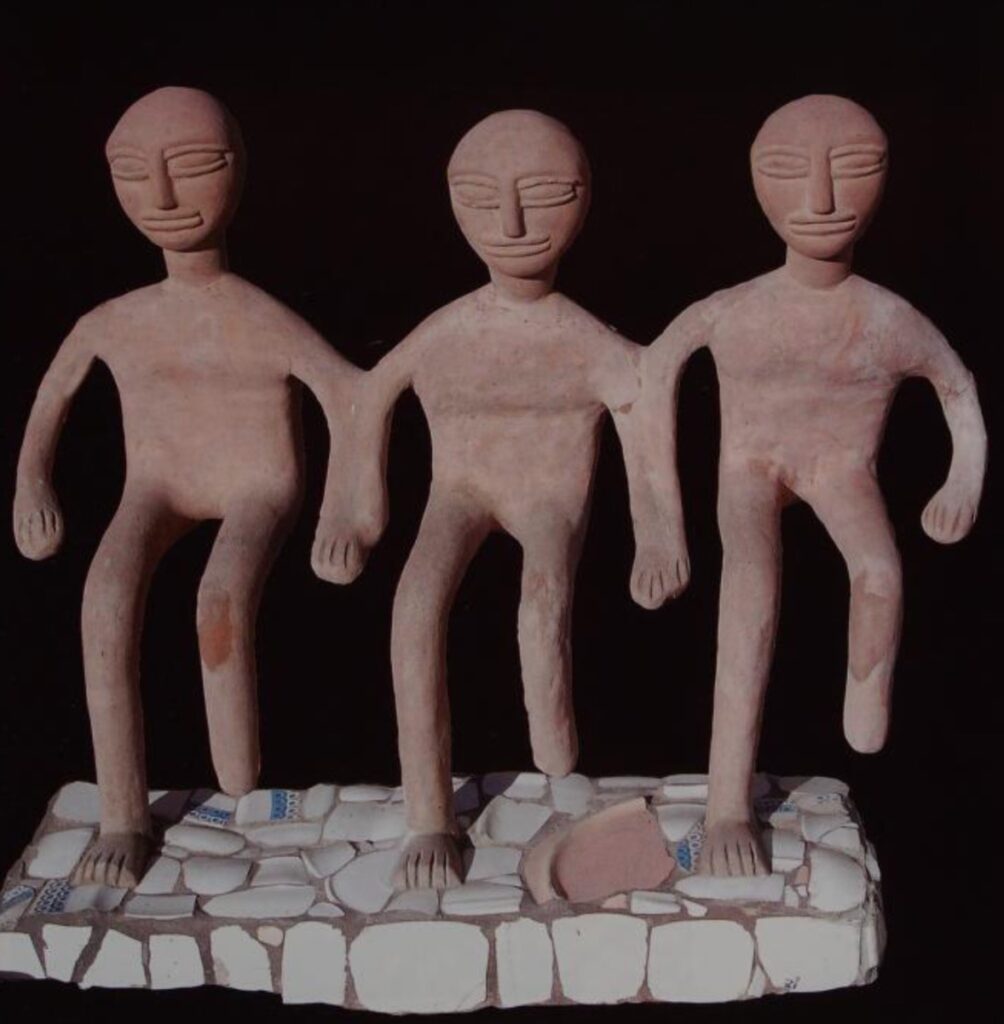
Nek Chand started collecting discarded materials— the aforementioned broken ceramics, glass bangles, tiles, electrical waste, and any and all remnants from the razed villages. Under the veil of the night, once he had wrapped up his job for the day, and transported these materials to a gorge near Sukhna Lake. At the time, the area was a protected forest area, off limits and a prohibited zone that formed where any construction was prohibited. For 18 years, he worked clandestinely, sculpting creatures and figures ranging from dancers, musicians, animals, and mythological characters using only discarded debris.
For 18 years, he worked clandestinely, sculpting creatures and figures ranging from dancers, musicians, animals, and mythological characters using only discarded debris.
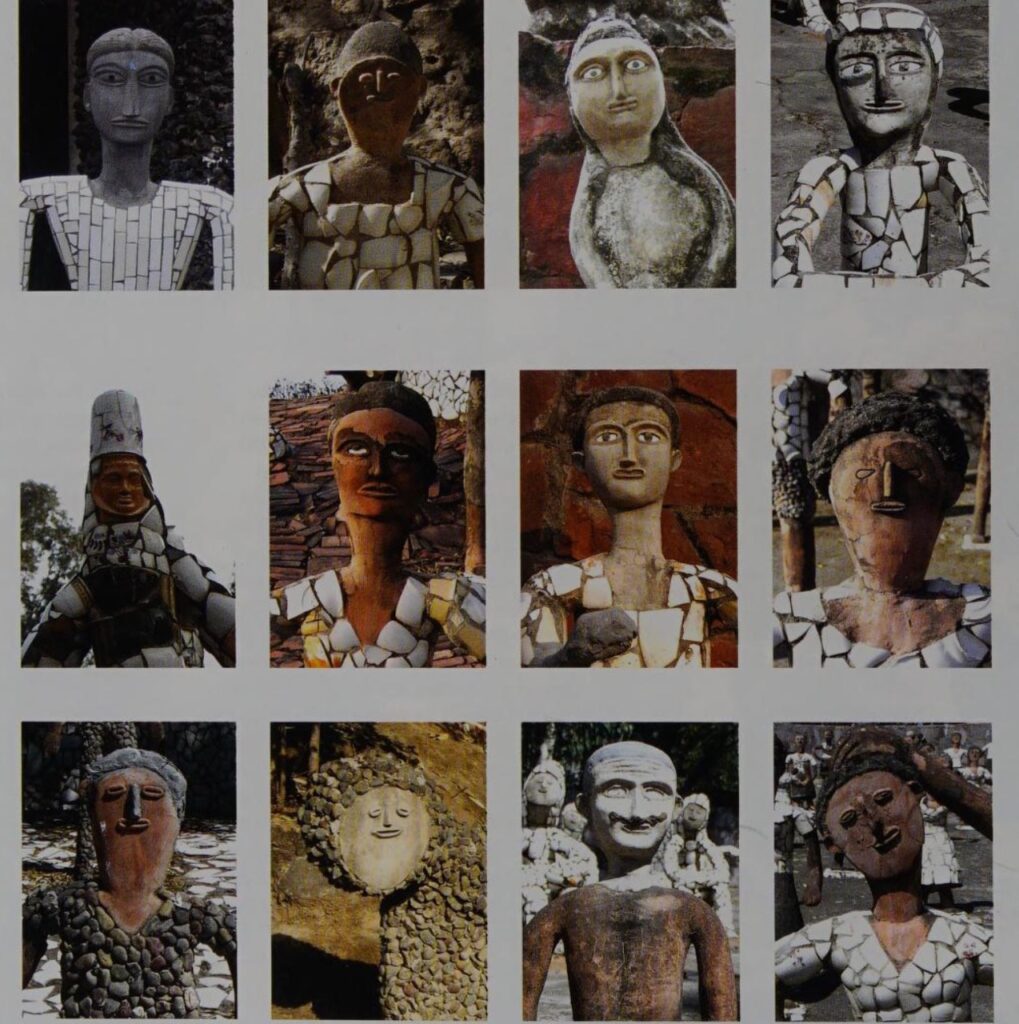
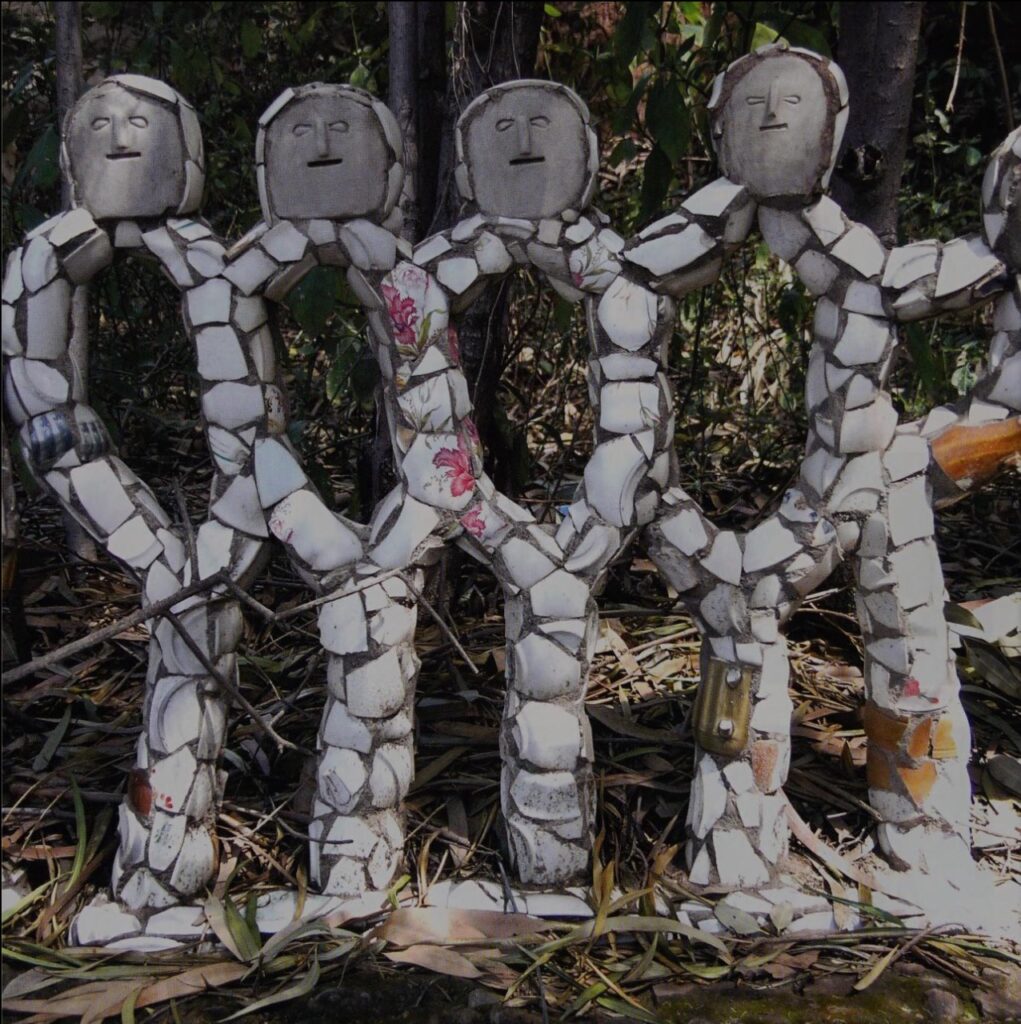
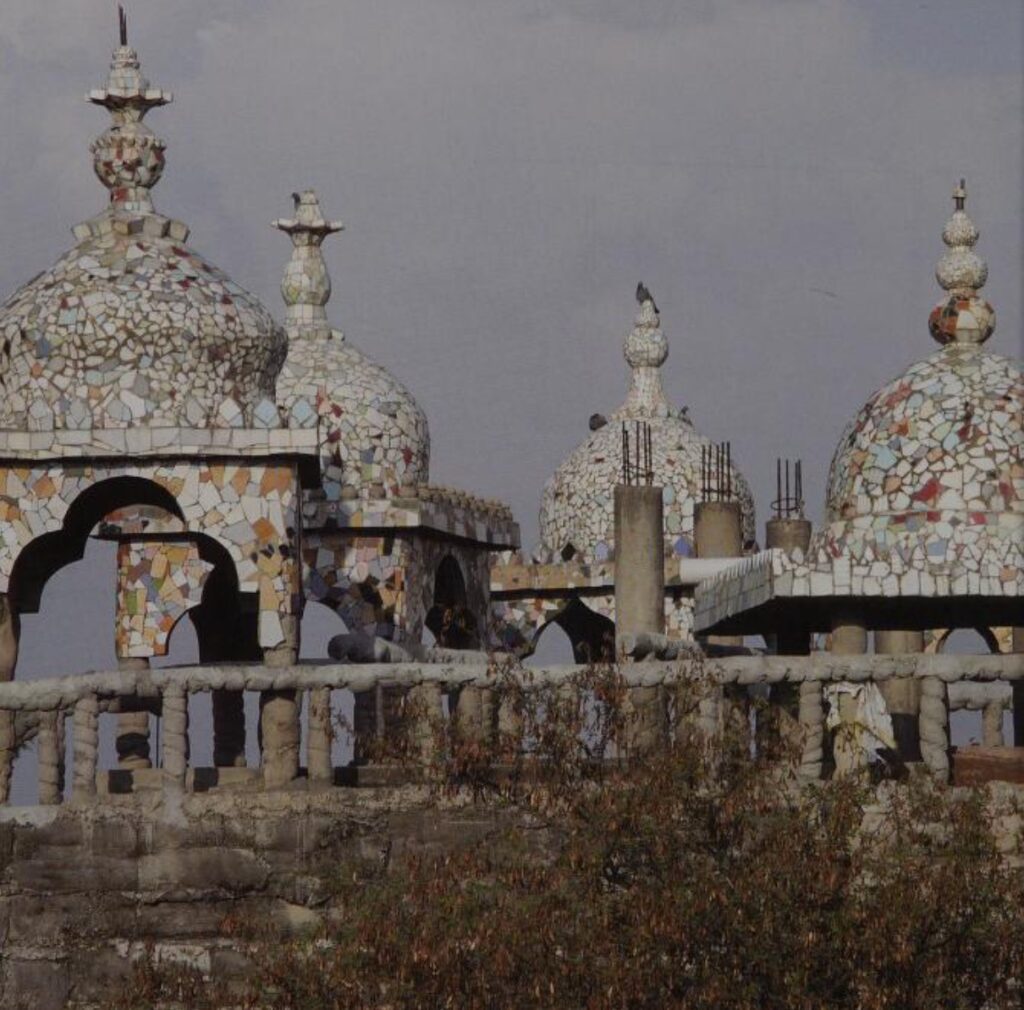
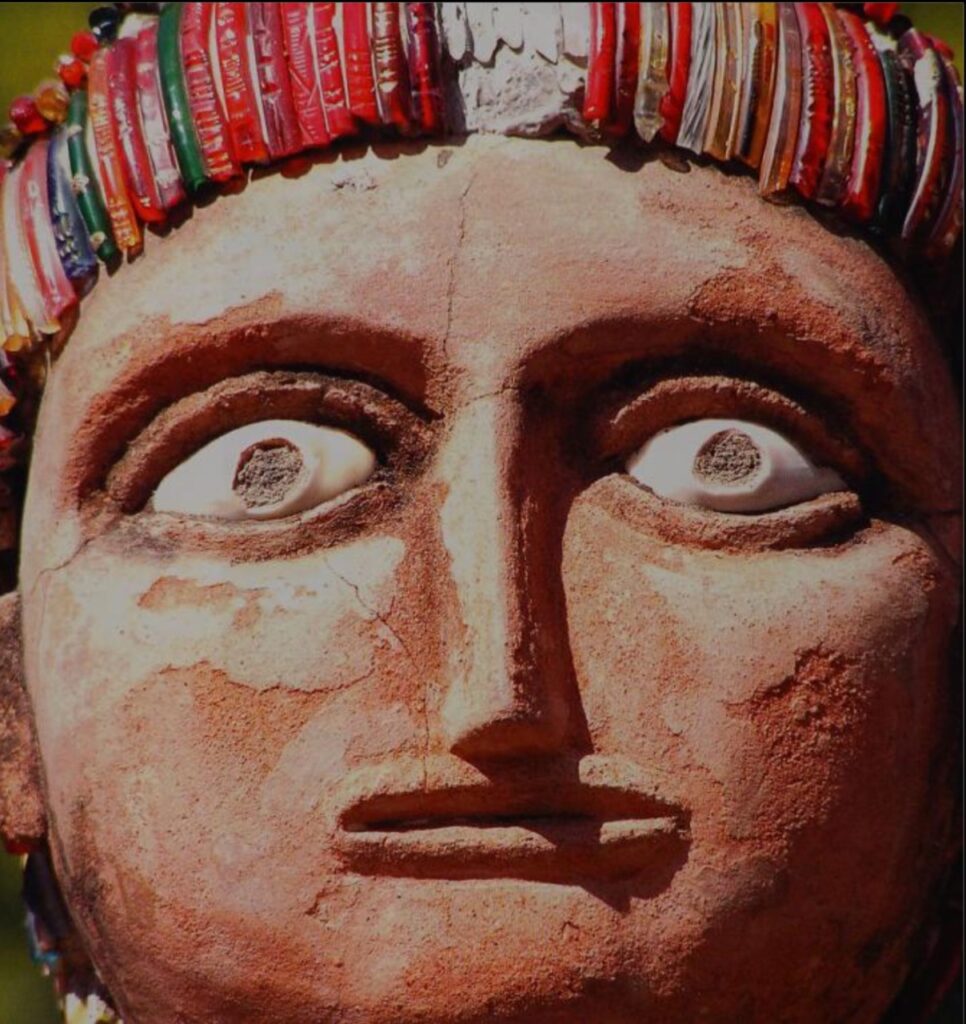
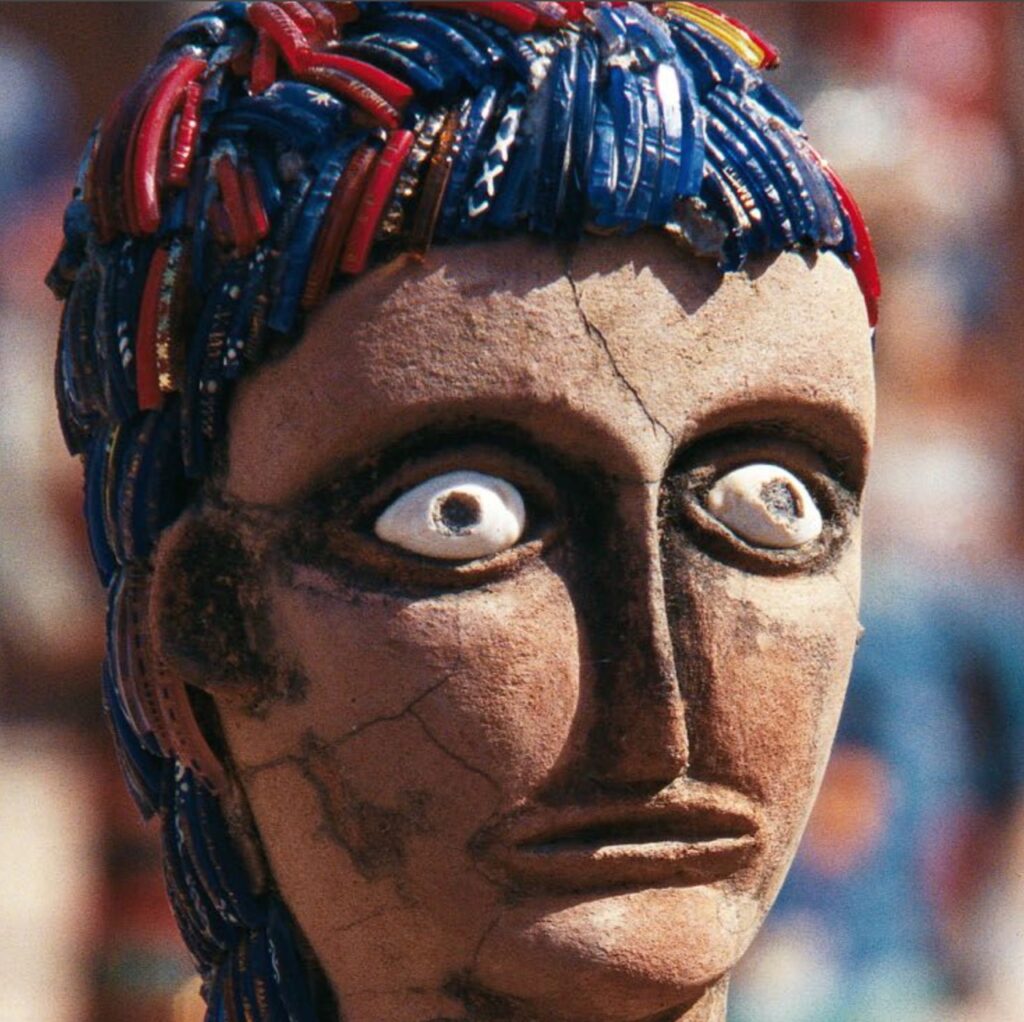
Nek Chand’s techniques were innovative: he mixed cement with sand and waste materials like broken glass, bangles, and crockery to create durable, intricate sculptures.
Discovery & subsequent recognition
The authorities found out about the illegal but beautiful garden in 1975. By then it had turned into a 12 -acre labyrinth of interlinked courtyards, waterfalls, and pavilions.
The intial reaction to demolish the illegal structure was quickly overturned by positive and supportive public opinion. So much so, that recognizing its artistic and cultural value, the Chandigarg adminstration officially inaugurated it as a public space in 1976.
Nek Chand was given a salary, the title of “Sub-Divisional Engineer, Rock Garden”, and a team of 50 laborers to expand his vision.
International recognition
Internationally too, Nek Chand’s genius did not go unnoticed. He earned “The Grand Medaille de Vermeil in Paris in 1980 followed by India’s highest civilian honors, “the Padma Shri” in 1984. A postage stamp featuring the Rock Garden was issued by the Indian government in 1983.
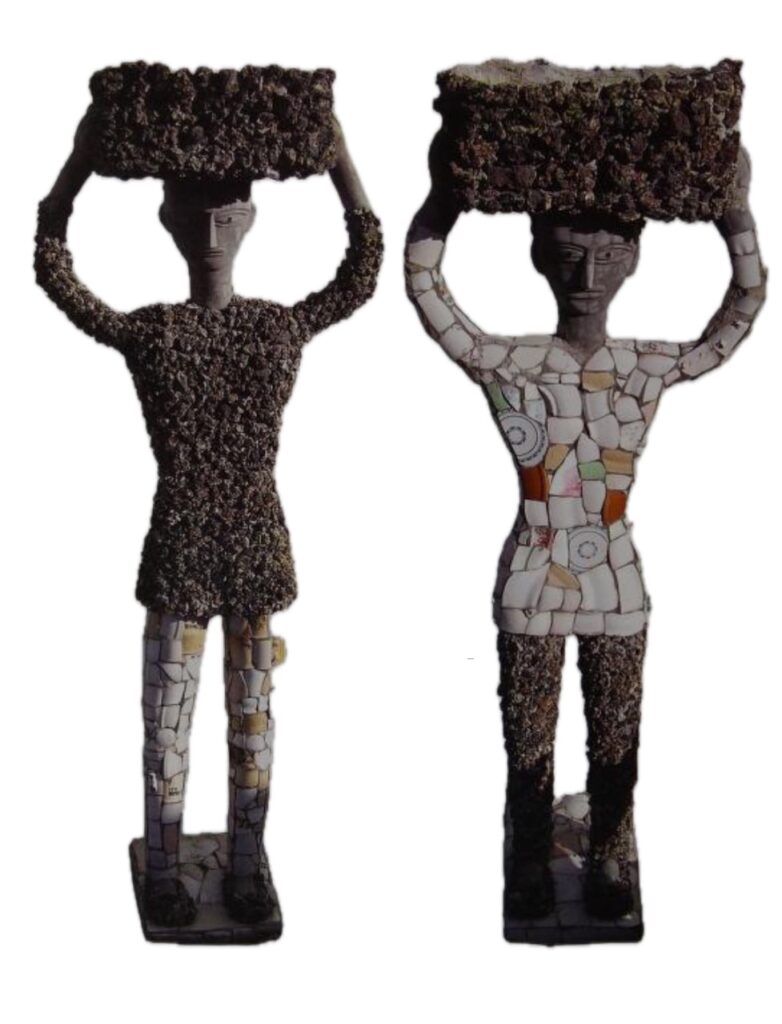
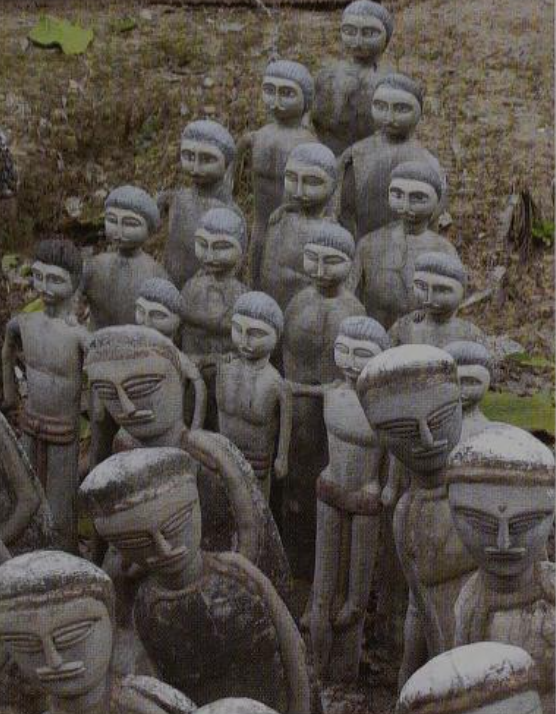
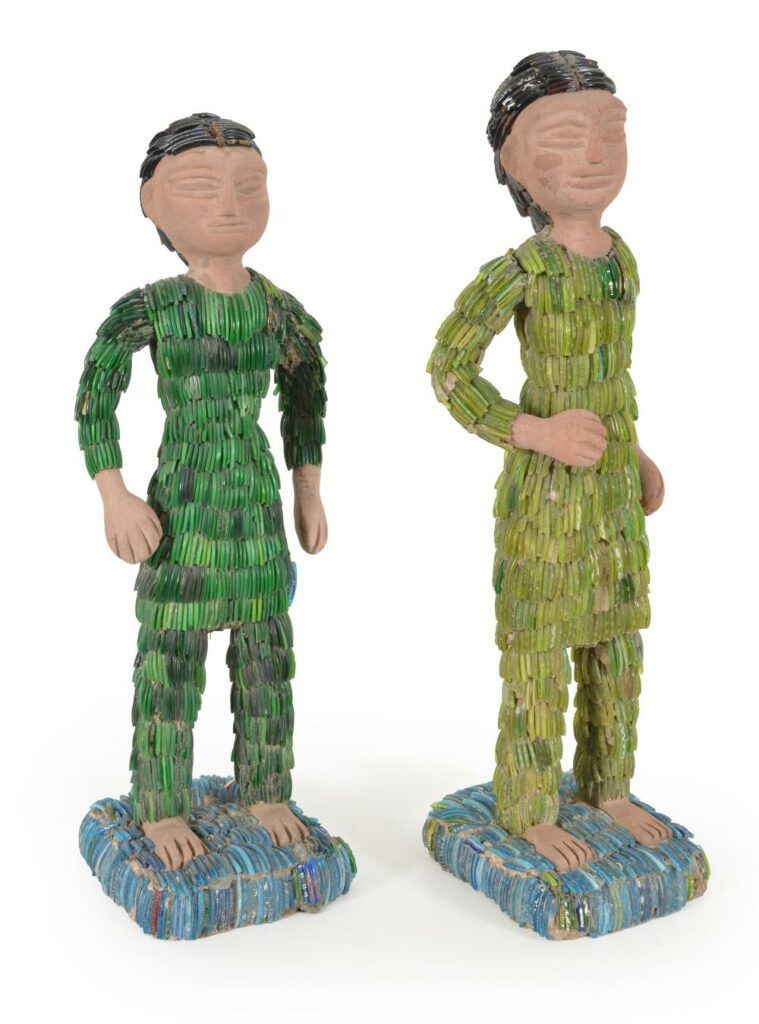
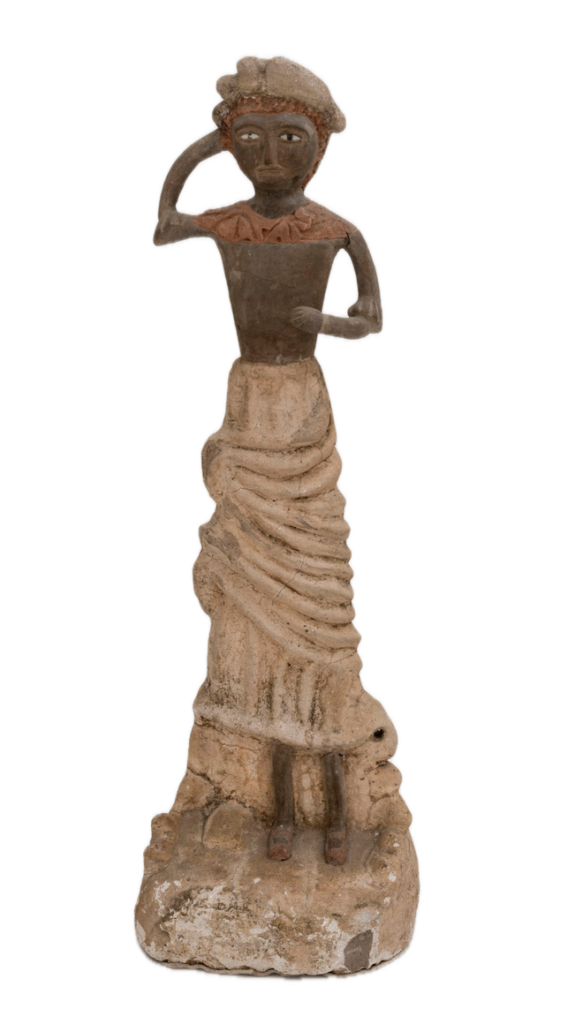
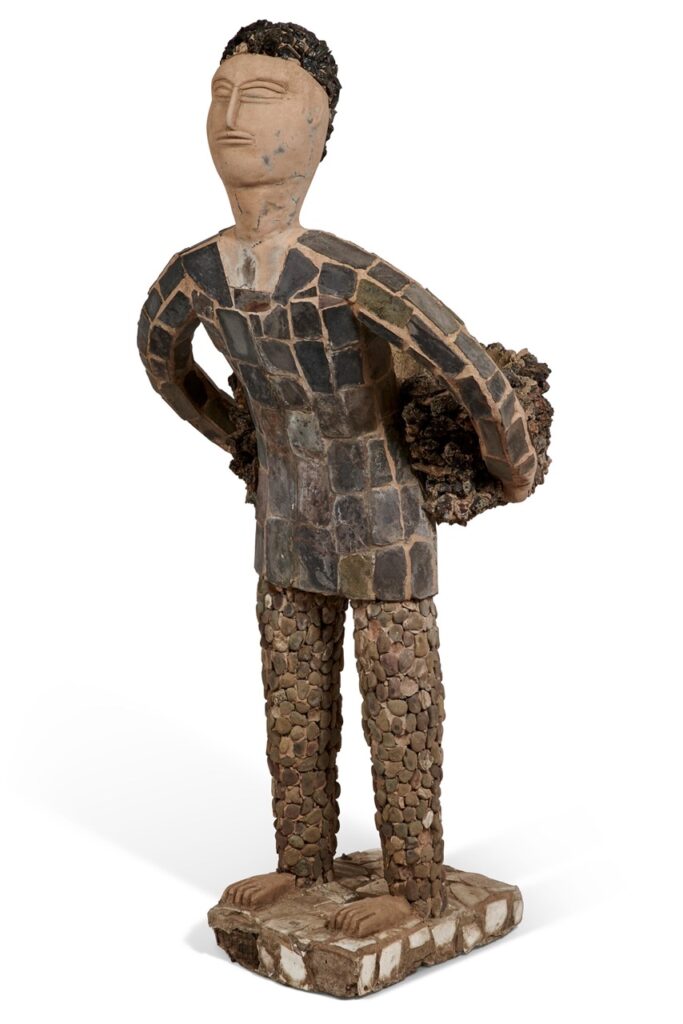
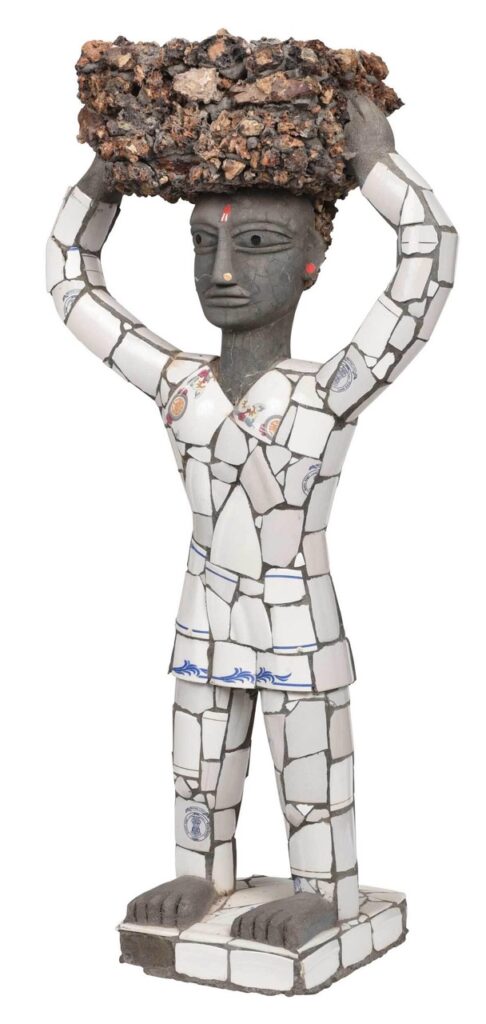
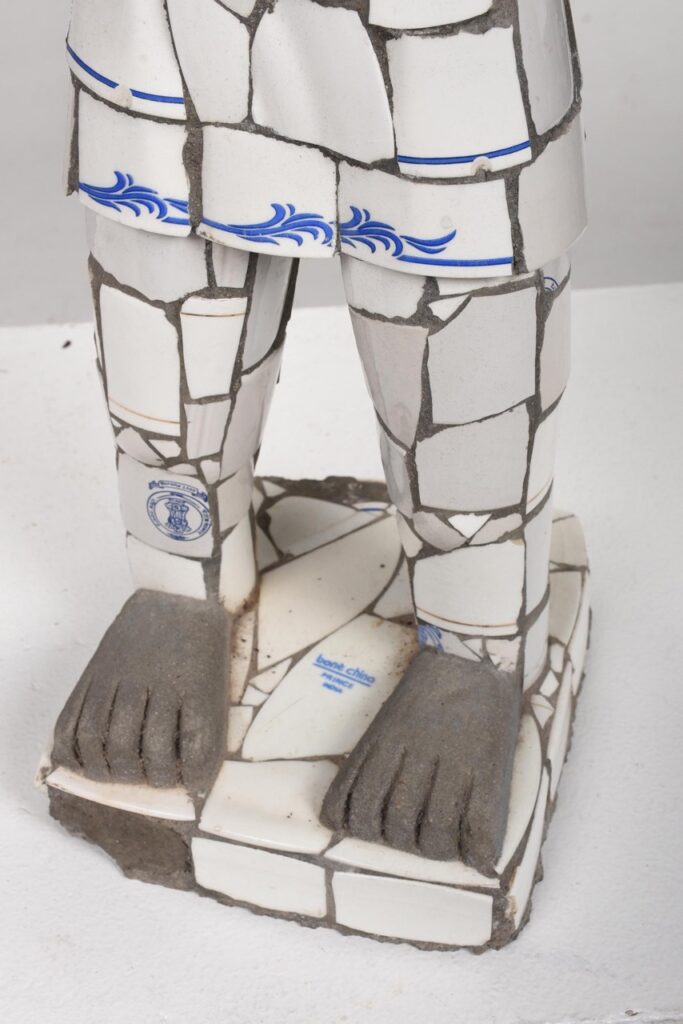
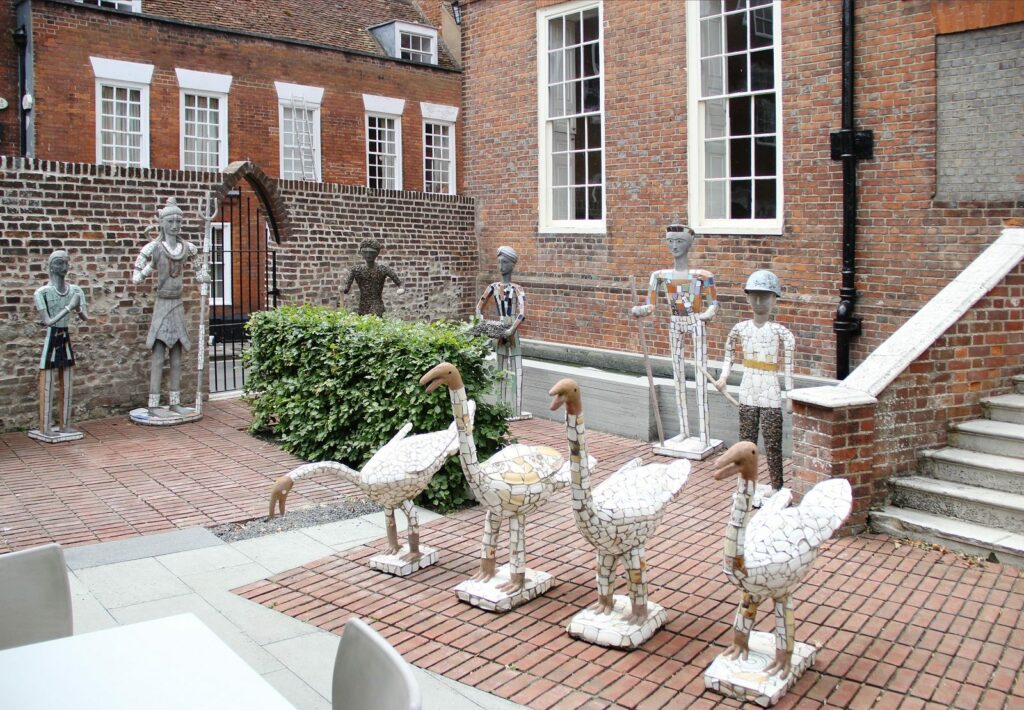
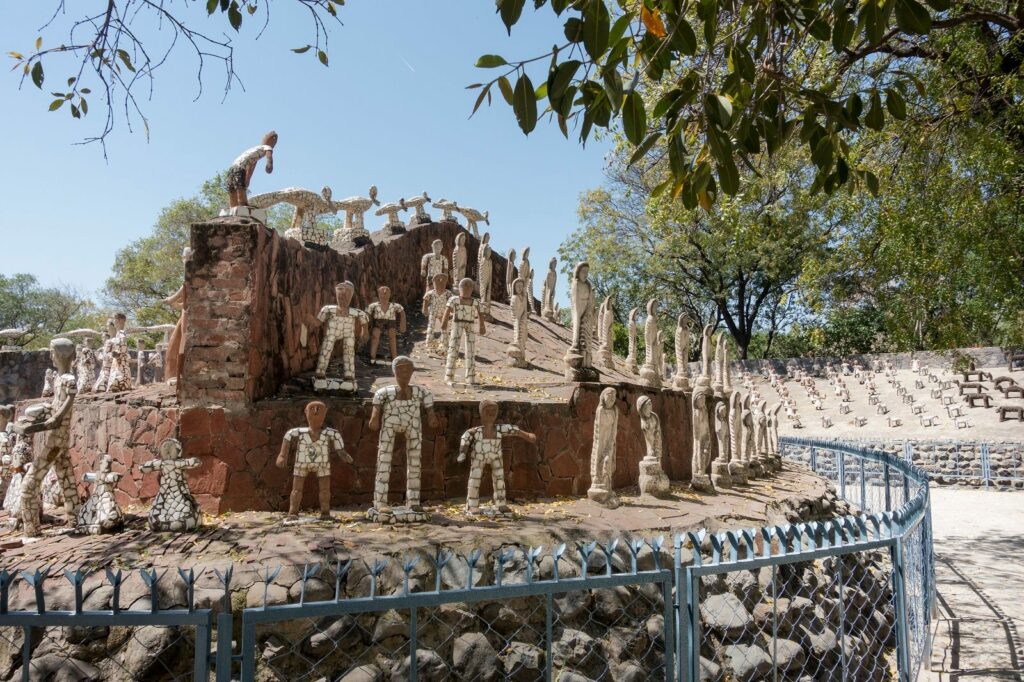
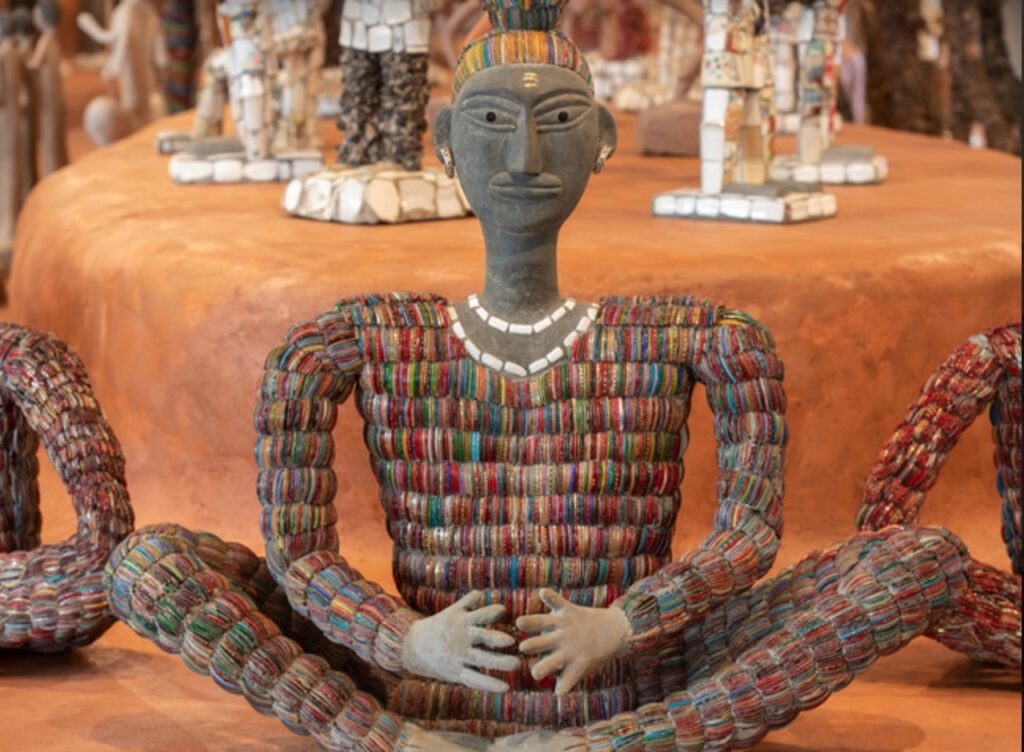
The Rock Garden is now one of India’s most visited tourist attractions, thousands of visitors daily. Sculptures from the garden have been featured in exhibitions and museums worldwide, including at the American Folk Art Museum in New York and the John Michael Kohler Arts Center in Wisconsin, where over 160 of his sculptures are permanently displayed. His works are also part of the Collection de l’art brut in Lausanne.
Many of his sculptures are in private collections across the world. Some of his works are immortalised in photography albums like “The Kingdom of Nek Chand” or originally “ Le Royaume de Nek Chand” by Philippe Lespinasse. While most of his major works remain in public spaces, the demand for his sculptures in private collections continues to grow, reflecting his status as a pioneer of outsider art and recycled sculpture.
Text & picture credits and additional resources
The collection, the ruin and the theatre : architecture, sculpture and landscape in Nek Chand’s Rock Garden, Chandigarh by Soumyen Bandyopadhyay & Iain Jackson. Book details here
Rock Garden at Chandigarh by Kamakshi Balasubramanian
John Michael Kohler Arts Center (USA): Houses a permanent collection of 160 sculptures, gifted by Nek Chand himself
American Folk Art Museum (New York): Exhibited his works in the “Concrete Kingdom” show
Pallant House Gallery (UK): Displayed his sculptures in an outdoor setting, thanks to the Nek Chand Foundation in London
Auction details via this site